Paris · Markets
Belleville Market and the Secret €4 Banh Mi That Tastes Like Immigrant Paris
A sensory guide to Belleville market in Paris, the immigrant food culture around Boulevard de Belleville, and the crunchy banh mi worth taking to Parc de Belleville.
Jermie Borjn
May 27, 2026 · Updated May 28, 2026 · 8 min read
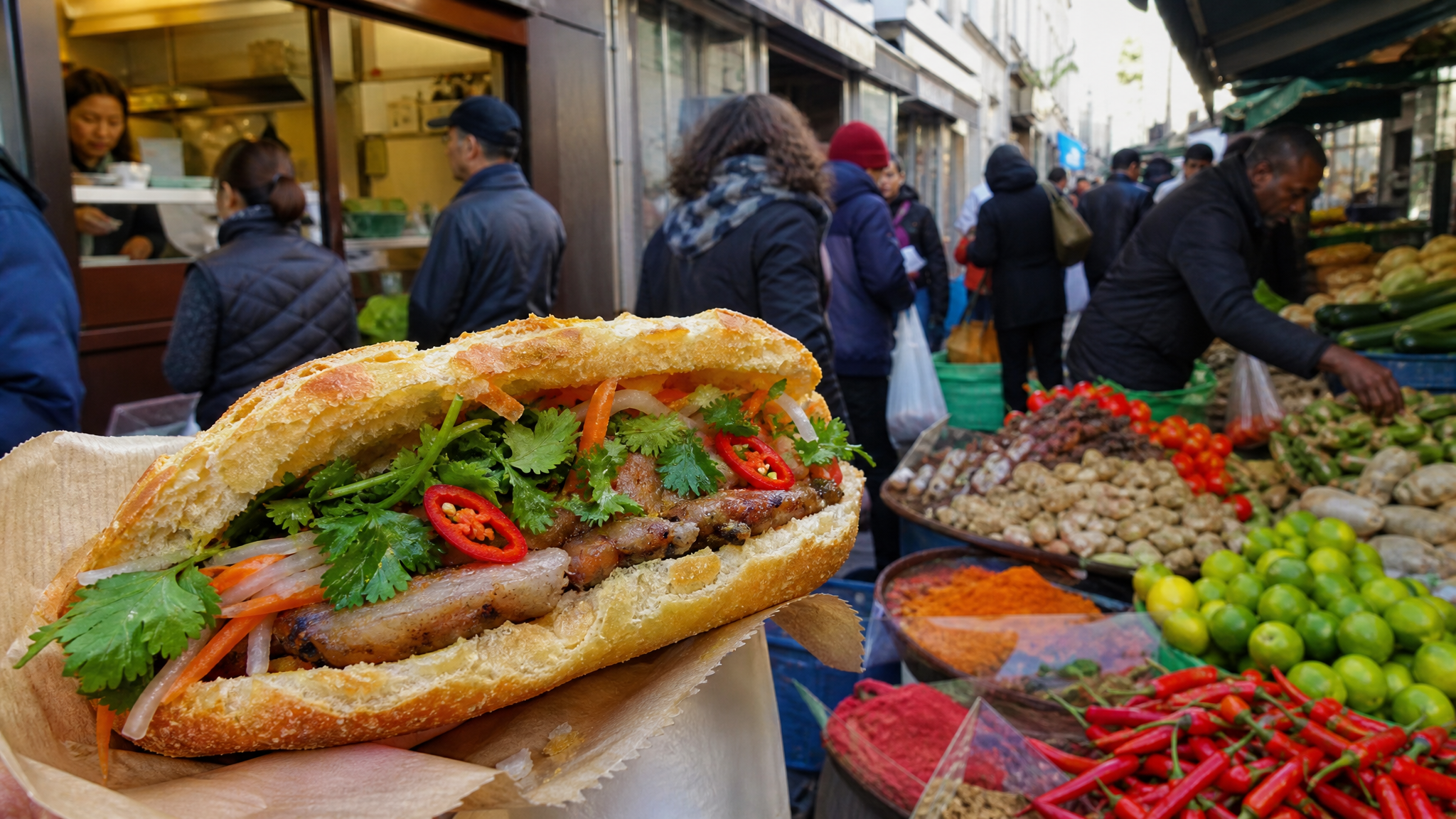
Forget the accordion soundtrack. Forget the neat pyramid of macarons under glass. Belleville on a market morning is Paris with its collar open: loud, practical, multilingual, and too busy to pose for you. On Tuesday and Friday mornings, Boulevard de Belleville becomes a moving river of shoppers, crates, plastic bags, herbs, fruit, fish, spices, and voices. Vendors call prices across the pavement. Shoppers answer in French, Arabic, Mandarin, Vietnamese, and the clipped universal language of people trying to get the best tomatoes before lunch.
The first shock is color. Red chilies, green coriander, bruised purple eggplants, citrus stacked like street lamps, bunches of mint so fragrant they seem to cool the air around them. The second shock is sound. Belleville market is not hushed like a covered gourmet hall. It barks and sings. Wheels rattle over asphalt. A vendor slaps a crate into place. Someone laughs from deep inside a queue. If you want the polished fantasy of Paris, go elsewhere. If you want the city as it is eaten by people who live there, start here.
The market that explains modern Paris
Belleville has always been a neighborhood of arrivals. That is why its food feels broader than the postcard version of French cuisine. North African grocers, Chinese vegetable stalls, Vietnamese sandwich counters, West African ingredients, halal butchers, old French cafés, and practical bakeries all share the same walking radius. This is not a trendy fusion concept created for a tasting menu. It is the daily logic of a city where migration has shaped the table for generations.
The market usually operates on Tuesday and Friday mornings, and those days matter. Come early, ideally before the late-morning crush, and you can actually see what is happening: which stalls locals inspect carefully, where the herbs move fastest, which fruit sellers have regulars, and where people stop for food rather than just ingredients. Later in the morning the atmosphere gets wilder and sometimes cheaper, but the best experience for a visitor is before the crowd becomes a current.
The small-window lunch: banh mi in Paris
After the market has done its sensory work, the perfect Belleville lunch is not a formal meal. It is a banh mi from a small Vietnamese counter or bakery window, the kind of place you might miss if you were looking only for white tablecloths. The legendary price is around €4 in some corners of the neighborhood, though Paris prices move and no bargain should be treated as permanent. The point is less the exact number and more the miracle: a sandwich that can cost less than a coffee in Saint-Germain and taste a thousand times more alive.
Banh mi is a Vietnamese sandwich built on a baguette, born from a complicated colonial history and perfected by Vietnamese cooks who turned French bread into something sharper, fresher, and more electric. In Paris it makes particular sense because the baguette can be excellent. When the bread is right, the sandwich becomes a meeting point: French crust, Vietnamese balance, Asian herbs, pickled vegetables, chili, cucumber, pâté or savory meat, and a rhythm of textures that never gets boring.
The bite you came for
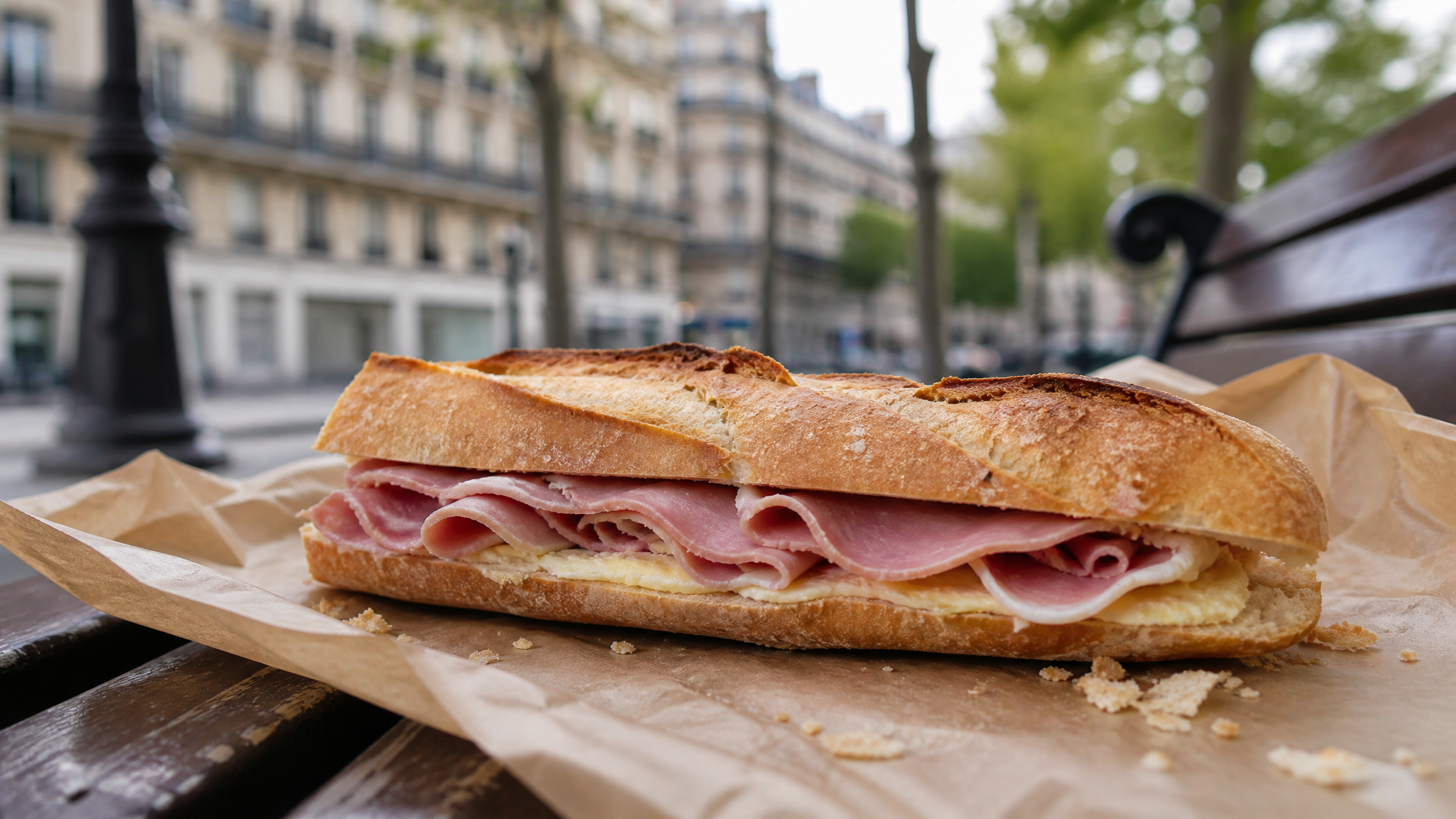
A good Belleville banh mi announces itself with the baguette. The crust cracks first, loud enough that you hear lunch before you taste it. Then comes the richness inside, followed quickly by chili heat, the snap of cucumber, the clean perfume of coriander, and the sour lift of pickled carrot and daikon. The best versions feel generous but not heavy. The bread carries the sandwich; the herbs rescue it from richness; the chili keeps you awake.
This is why the sandwich belongs in Belleville. It tastes like the neighborhood: French and not only French, cheap but not careless, fast but layered, everyday but memorable. You do not need a reservation, a tasting menu, or an outfit. You need small cash, patience, and enough curiosity to walk past the obvious cafés until the smell of warm bread and herbs pulls you sideways.
Belleville is not where Paris loses its Frenchness. It is where you understand that modern Paris has many accents.
Jermie Borjn
Where to eat it
The best move is to take the sandwich uphill to Parc de Belleville. The climb is short but honest, and at the top you get one of the city’s most underrated views: rooftops, zinc, towers, sky, and the strange satisfaction of eating a perfect cheap lunch above a very expensive city. Sit on a bench or low wall. Let the coriander fall where it wants. Let the chili sting a little. This is a better Paris souvenir than anything sold in a gift shop.
A market route that works
Start near the Belleville métro and walk slowly rather than trying to “finish” the market. The point is not to buy everything; it is to understand the pattern. Herbs and vegetables first, then fruit, then the smaller food counters and surrounding shops that turn market ingredients into lunch. If you are building a picnic, add mandarins or stone fruit when in season, a handful of nuts, and something spicy from a nearby counter. The banh mi can be the center of the meal, but Belleville makes it easy to add texture around it.
It is also worth remembering that Belleville changes block by block. One corner feels Chinese, another North African, another like an old Paris café that never updated its chairs. That is exactly the appeal. Do not rush through looking only for the sandwich. The sandwich is the hook, but the neighborhood is the story: a Paris that feeds people before it performs for them.
- Best days: Tuesday and Friday morning.
- Bring coins or small notes for faster buying.
- Avoid blocking regular shoppers when photographing stalls.
- Look for fresh coriander, crisp bread, and bright pickles.
- Take lunch to Parc de Belleville for the view.
Belleville is a reminder that Paris is not a museum of Frenchness. It is a city that keeps absorbing, arguing, feeding, and reinventing itself. The banh mi is a small object, but it carries that story beautifully: a French baguette filled with Vietnamese memory, sold in a working neighborhood, eaten on a hill above the city. For four euros, or somewhere close to it, that is hard to beat.
FAQ
Questions travelers ask
- When is Belleville market open?
- Belleville market is best visited on Tuesday and Friday mornings along Boulevard de Belleville. Morning is the safest window for full stalls and better atmosphere.
- What is banh mi?
- Banh mi is a Vietnamese sandwich made with baguette and usually filled with savory protein, pickled vegetables, coriander, cucumber, chili, and sauce.
- Why is banh mi especially good in Paris?
- Paris can offer excellent baguettes, and banh mi depends on the contrast between crisp French-style bread and bright Vietnamese fillings.
- Where should I eat a Belleville banh mi?
- Take it uphill to Parc de Belleville, where you can eat with one of the most underrated views over Paris.